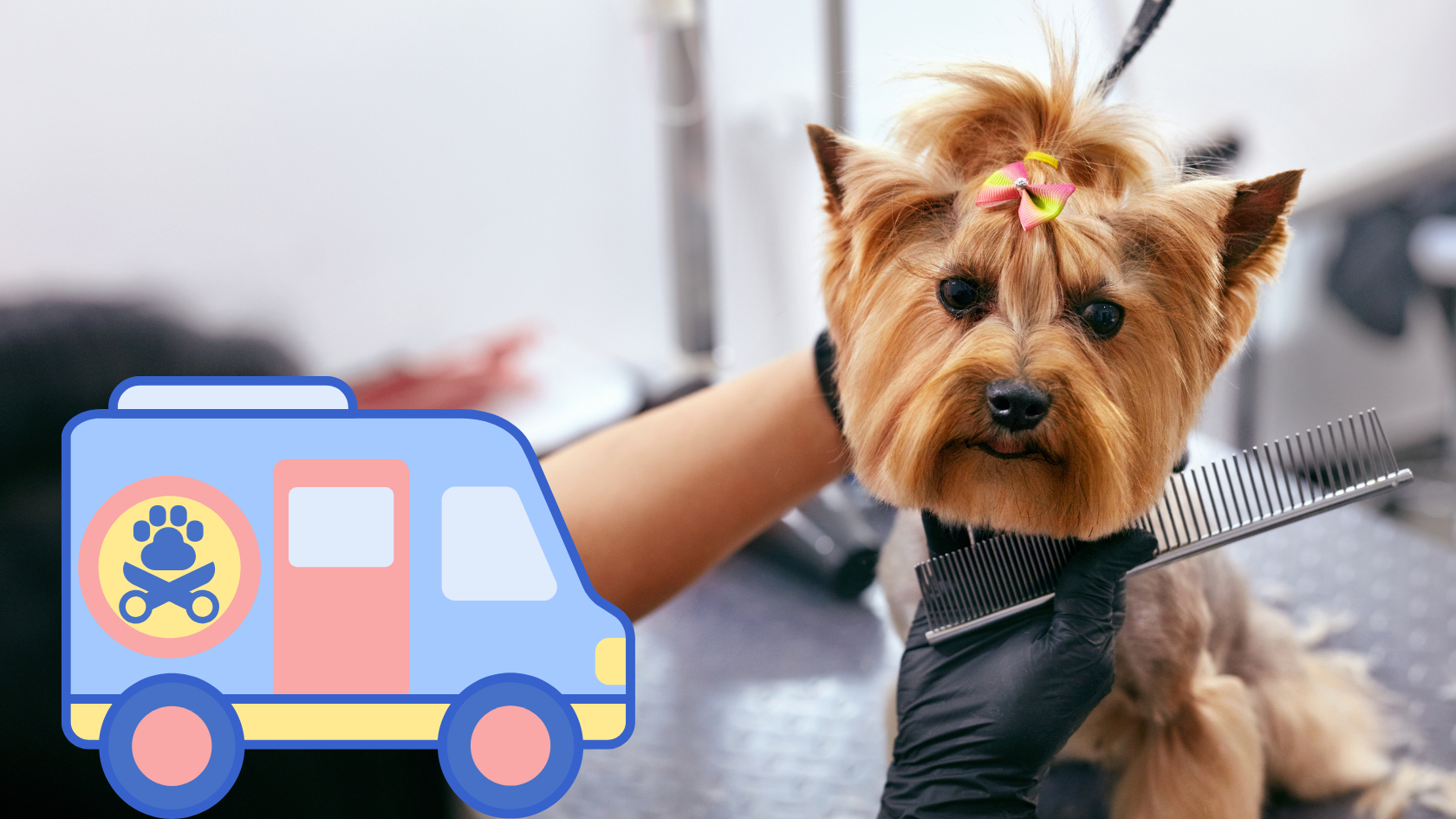
1. Water Tank Liability: What Happens When the Tank Goes Wrong
A fully loaded mobile grooming van carries a significant amount of water — commonly 40 to 100 gallons, depending on your setup. That water is under pressure. Tanks, fittings, and hoses experience wear, and when a connection fails or a tank ruptures, that water goes somewhere. Sometimes it goes into a client's driveway. Sometimes it seeps into a garage foundation. Sometimes it damages landscaping, a vehicle parked nearby, or property inside an open garage.
Here's where the coverage question gets complicated: is that a commercial auto claim or a general liability claim? The answer depends on your specific policy language and how the incident is characterized — and the two policies don't always agree on who responds. Commercial auto covers vehicle-related incidents; GL covers property damage you cause in the course of operations. A water tank that's integral to the vehicle but causes off-vehicle property damage can fall into a gray zone between the two.
Before you assume your commercial auto policy handles it, it's worth asking your agent specifically: if my water tank fails and damages a client's property, which policy responds, and is there any gap between the two? That question alone can surface a coverage structure issue that's genuinely common in mobile operator policies.
2. Pet Escape from the Van: Who's Liable When a Dog Runs Into Traffic
This scenario happens more than the industry talks about. A dog bolts during loading or unloading, squeezes through a door that wasn't fully latched, or panics mid-groom. Now you have an animal loose in a residential street or, worse, near a busy road.
If that animal causes a car accident — or is hit by one — the liability questions stack up fast. You had care, custody, and control of the animal at the time of escape. The vehicle owner whose car swerves to avoid the dog may have a claim against you. The pet owner whose animal was injured or killed will almost certainly have one.
The critical coverage issue here: standard general liability policies include a Care, Custody & Control exclusion, meaning damage to property (including animals) in your care is specifically carved out of standard GL. If you're relying solely on GL for pet-related incidents, you may not have the coverage you think you do. Animal bailee coverage — which specifically addresses your liability for animals in your care — is the line designed for this situation, and it's not automatically included in a standard GL package.
Your commercial auto policy may respond if the escape is directly tied to the vehicle, but an animal that runs two blocks and causes a separate incident? That's a murkier question worth clarifying before it's an actual claim.
3. Generator Carbon Monoxide Risk: An Exposure That's Hiding in Plain Sight
Most mobile groomers run a generator to power their dryers, clippers, and other equipment. Generators produce carbon monoxide. A grooming van is an enclosed space.
If the ventilation is inadequate, if a generator is positioned incorrectly, or if a vent becomes obstructed, CO levels inside the van can rise to dangerous concentrations — and pets are more sensitive to CO than humans. A dog that comes back from a grooming appointment lethargic, disoriented, or critically ill, with CO as the cause, creates both a Care, Custody & Control claim and, depending on the outcome, a wrongful death of pet claim.
There's also an operator angle: if you're a solo groomer and CO incapacitates you inside your own van, you're alone. Workers' compensation for a sole proprietor is a complicated question — in many states, owners can opt out, which means there's no safety net for your own medical bills if something goes wrong during a work-related incident.
Neither of these — pet CO exposure liability or operator injury in a one-person operation — gets discussed much in the standard "here's what mobile groomers need" content. Both are real exposures worth raising with a specialized insurance broker who knows the pet care space.
4. The Solo Operator Problem: No Witnesses, No Backup Story
This is the one that keeps experienced mobile groomers up at night, and it's almost never addressed in generic insurance content.
When you groom alone, you are the only person who knows what happened during that appointment. A client picks up their dog and notices a cut, a broken nail, unusual limping, behavioral distress — anything — and claims it occurred during the groom. You know it didn't, or you know exactly what happened and why. But there's no one to corroborate your account.
Professional liability coverage (sometimes called errors and omissions in other industries, or specifically structured as animal care professional liability) is designed for exactly this situation. It covers claims alleging that your professional services caused harm — including the legal defense costs of disputing a claim you believe is inaccurate. Without it, even a meritless claim costs you out of pocket to defend.
Some carriers are increasingly requiring or recommending that mobile groomers document each appointment — photos before and after, written intake notes, client signature on condition forms. Good risk management practice regardless. But the coverage foundation for a disputed claim is professional liability, not general liability, and the distinction matters when a client files a complaint.
5. Business Income: The Exposure That Starts the Day Your Van Can't
Your van is your grooming salon, your equipment room, your front door, and your livelihood. If it's out of commission — from an accident, a mechanical failure, flood damage, a generator fire, or any covered event — you are not just without a vehicle. You are without any income, while your fixed costs (van loan, phone, insurance, marketing) continue without interruption.
Business income coverage (sometimes called business interruption coverage) is built for exactly this gap. It replaces lost income during the period your operation is suspended due to a covered loss. For a mobile groomer, the math is simple and sobering: a van in the body shop for three weeks, waiting on parts or an insurance settlement, is three weeks of booked appointments you cannot keep. That revenue doesn't come back.
The question to ask about any business income policy: what's the waiting period (typically 48–72 hours before coverage kicks in), what's the coverage period, and does it account for the realistic timeline of repairing or replacing a fully outfitted grooming van? A base vehicle can be repaired quickly; a van with a custom water system, tank, grooming equipment, and electrical setup takes considerably longer to put back in service.
The Coverage Conversation Mobile Groomers Aren't Having
None of the gaps above are unfixable. They're just underexplored — because most general insurance content for mobile groomers treats commercial auto as the answer and stops there.
The right insurance structure for a mobile grooming operation looks more like a layered program: commercial auto, general liability with animal bailee, professional liability, business income, and a clear conversation about how each policy interacts with the others when an incident touches more than one line.
At Spire, we work specifically with pet care businesses — groomers, boarders, veterinary practices, and mobile operators — and we're familiar with the questions that specialty coverage needs to answer for your specific setup. If you want to review your current coverage against the exposures above, we're glad to have that conversation.
Spire Insurance Solutions
spireamerica.com | 800-686-8664 | service@TheSpireTeam.com
Licensed in TX, AZ, NV, CO, NE, OK, IL, MN, WI, MI, IN, OH, PA, NC, MA, ME
Coverage is subject to underwriting and the specific terms and conditions of your policy. Consult a licensed agent to understand what your operation's coverage includes and where gaps may exist.
Sources & Further Reading
- Pet Care Insurance — Mobile Pet Groomer Insurance
- Insurance Information Institute / Triple-I — Growing Insurance Needs for Pet Care Businesses (May 2026)
- NAIC — Cannabis and Insurance: Identifying Coverage Gaps in Emerging Industries (referenced for Care, Custody & Control exclusion framework)
- AVMA PLIT — Professional Liability 2026 Premium Guide
- MoneyGeek — Best Dog Grooming Business Insurance 2026
- PetBusinessInsurance.com — What Are the Best Insurance Options for Pet Grooming Businesses?
- OSHA — Carbon Monoxide Hazards from Small Gasoline-Powered Engines
.png)



.png)