How Most Grooming Salons Are Structured
The booth rental model is common in grooming, borrowed from the beauty industry. A salon owner provides the space, equipment, water, and client traffic. An independent groomer pays a flat weekly or monthly fee, keeps their own appointment book, and takes home their service revenue.
It feels like a clean arrangement. For many salon owners, it lowers payroll complexity and overhead. But from an insurance and liability standpoint, that arrangement is far messier than it looks.
The Core Problem: Whose Policy Covers What?
Most grooming general liability policies are written to cover your employees acting in the course of their work. When a booth renter — classified as an independent contractor — injures a dog or causes property damage, your policy may exclude the incident entirely. Why? Because the contractor isn't your employee, and the work isn't technically being done on your behalf.
At the same time, many independent contractors carry little or no business insurance of their own. They assume the salon's policy covers the space. The salon assumes the contractor's personal policy covers their work. In reality, both assumptions may be wrong simultaneously.
The dog that was injured belongs to a client who came to your salon. Whether your policy covers that incident depends on how your policy is written, how the contractor relationship is structured, and how your carrier interprets the claim. That's a lot of "depends" when a client is threatening legal action over their injured pet.
Worker Misclassification Is Also a Federal Issue Right Now
It's not just an insurance problem. It's a regulatory one that's getting more urgent.
On February 26, 2026, the U.S. Department of Labor proposed a new rule revising how the agency determines whether a worker is an employee or an independent contractor under the Fair Labor Standards Act. The proposed rule applies an "economic reality" test — looking at factors like how much control you exercise over the worker's schedule, tools, and methods, and whether the worker is economically dependent on your business. (U.S. Department of Labor, February 2026)
For grooming salons, this matters. If your booth renters:
- Work exclusively out of your salon
- Use your equipment and grooming supplies
- Follow your scheduling system
- Serve primarily your client base
...they may look a lot like employees to a federal auditor — regardless of what your contract says. At least 12 states proposed or passed legislation in 2025–2026 to increase enforcement of worker classification rules, with penalties including back taxes, benefits liability, and fines. (Economic Policy Institute)
The beauty industry has been dealing with this specific issue around booth renters for years. A 2026 research report from Louisville Beauty Academy concluded that the DOL's proposed rule creates significant ambiguity for any service business operating on a booth rental model — and pet grooming is no different.
What the Right Insurance Structure Looks Like
If you have independent contractors working out of your salon, your insurance program needs to account for that explicitly. A few things to address:
1. Require contractors to carry their own coverage — and verify it.
Every contractor operating in your space should carry their own general liability policy that includes animal bailee (care, custody, and control) coverage. Get a certificate of insurance before they take a single appointment. Renewal it annually. An uninsured contractor working under your roof is your uninsured contractor when something goes wrong.
2. Review whether your own policy covers contractor acts.
Some grooming policies include coverage for independent contractors under certain conditions. Others explicitly exclude it. This is not language you want to discover after a claim. Ask your broker directly: "If a contractor working in my salon injures a client's dog, does my policy respond?"
3. Consider an additional insured endorsement.
You may be able to require contractors to name you as an additional insured on their policy, meaning their coverage would extend to claims arising from their work in your space. This is standard practice in many industries and worth discussing with your broker.
4. Document the contractor relationship clearly.
Written agreements that define the contractor's independence — their ability to work elsewhere, set their own prices, use their own tools — help establish true independent contractor status under the DOL's economic reality test. This protects you on the employment law side and clarifies the insurance relationship. (Jackson Lewis, DOL 2026 Rule Analysis)
A Real Scenario to Consider
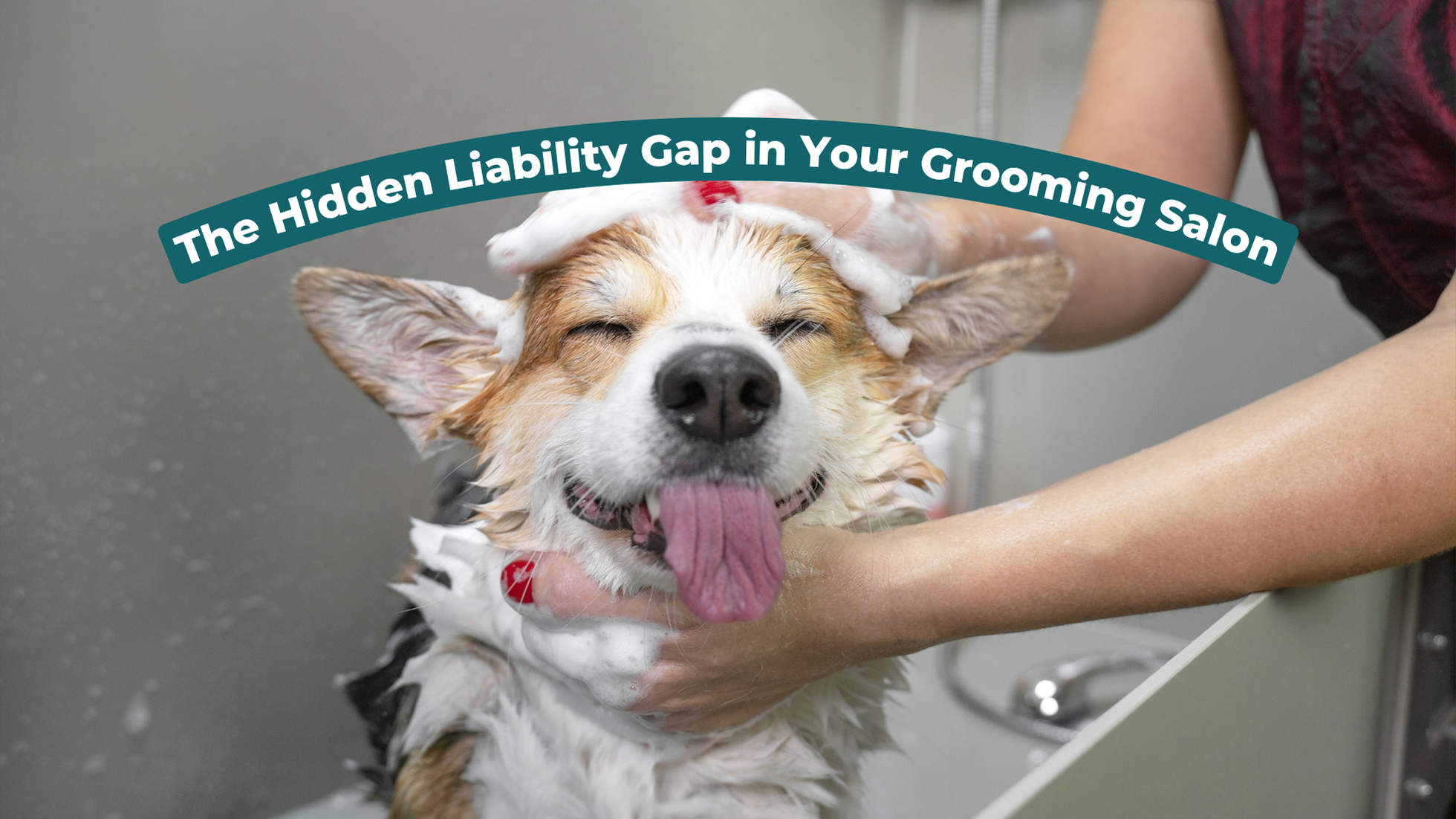
A client drops off her dog at your salon for a grooming appointment. The appointment is handled by your booth renter — someone who's been working out of your space for two years, uses your tubs and dryers, and books through your front desk. During the groom, the dog is injured. The client holds your salon responsible. She came to your business, not to the contractor personally.
Your carrier reviews the claim. The contractor is classified as an independent contractor on your policy. The incident may not be covered under your policy. The contractor's policy — if they have one — may exclude work done in a third-party commercial space. This is not a hypothetical. It is the kind of claim that grooming salon owners face, and it's the kind that results in out-of-pocket settlements and, sometimes, closed businesses.
The Bottom Line
The booth rental model has real advantages for grooming salon operators. But it comes with insurance and regulatory exposures that most generic grooming insurance guides never address.
If you have contractors working in your space — or if you're planning to expand using that model — it's worth having a direct conversation with a specialized insurance broker who understands the pet care industry before your next contractor starts their first appointment.
At Spire Insurance Solutions, our team works with grooming salon owners across 16 states to build coverage programs that account for how their businesses are actually structured — including the contractor and booth rental arrangements that standard policies often don't address.
All coverages referenced in this article are subject to underwriting review, policy terms, and carrier approval. Coverage availability and terms vary.
Ready to review your current coverage structure? Contact Spire at 800-686-8664 or service@TheSpireTeam.com.
Sources:
- U.S. Department of Labor — 2026 Proposed Independent Contractor Rule
- U.S. Department of Labor — 2026 Rulemaking Page
- Jackson Lewis — DOL's Proposed 2026 Independent Contractor Rule: What Employers Need to Know
- Economic Policy Institute — Misclassifying Workers as Independent Contractors
- Louisville Beauty Academy — The 2026 DOL Independent Contractor Rule and Its Impact on the Beauty Industry
- Butler Snow — What the DOL's 2026 Proposed Rule Means for Businesses
.png)







.png)