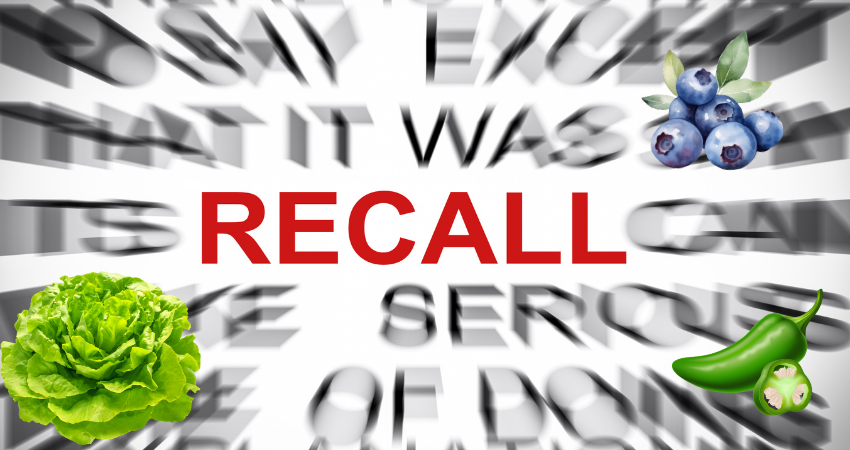
If you run a restaurant, this has been a nervous summer to read the news. In August 2026, the CDC linked a multistate Salmonella Javiana outbreak to jalapeños served at Chipotle and Qdoba — a case count that opened at 345 people across 27 states and kept climbing. Just weeks earlier, Taco Bell pulled produce from restaurants in July after its iceberg lettuce was tied to a Cyclospora outbreak traced to a single supplier in Mexico. Two national brands. Two ordinary ingredients. Neither problem started in the restaurant's own kitchen.
That last part is the one that should make every independent operator pause. These weren't sloppy-kitchen stories — they were supply-chain stories. The contamination rode in on produce from a vendor, and it could just as easily have been your jalapeños, your lettuce, your sprouts. So it's worth asking the uncomfortable question now, calmly, before you ever have to ask it in a panic: if an outbreak hit your restaurant, would your insurance actually respond?
Short answer: For a lot of restaurants, only partly. Your general liability may cover what you owe a customer who got sick — but the costs that can actually sink a small restaurant (a health-department-ordered closure, replacing contaminated stock, a product recall, decontamination, employee testing, and rebuilding your reputation) are usually not in a standard business owner's policy (BOP). They come from specific endorsements most owners don't know to ask for — until the claim is denied.
What happened during the summer 2026 outbreak season?
Two large foodborne outbreaks put restaurant supply chains in the national spotlight. Here's the verified picture:
- Salmonella Javiana — jalapeños (Chipotle & Qdoba). In early August 2026, the CDC announced an outbreak that had sickened 345 people across 27 states, with dozens hospitalized. The count grew as the investigation continued — to 431 cases in 32 states by the CDC's August 20 update. Investigators traced it to fresh jalapeños grown in Sinaloa, Mexico and distributed through a produce supplier; of the people interviewed, the vast majority had eaten at a Mexican-style restaurant, including Chipotle and Qdoba, which stopped serving the affected peppers once notified.
- Cyclospora — iceberg lettuce (Taco Bell). In July 2026, the CDC and FDA linked a multistate cyclosporiasis outbreak to shredded iceberg lettuce sourced from Taylor Farms de Mexico. Taco Bell pulled fresh produce from restaurants in the affected states on July 9, 2026, and the supplier recalled the lettuce on July 17.
The common thread: the pathogen came in through an ingredient from an outside supplier. A big chain can absorb that. For an independent restaurant, a single outbreak — or even a precautionary health-department closure during one — can be an existential financial event.
Does a standard BOP cover foodborne illness or food contamination?
Only in a limited way — and usually not for the costs that hurt most. A business owner's policy bundles property and general liability, and your general liability (products-completed operations) coverage is generally designed to respond when a customer is injured — for example, a diner who gets sick and files a claim or lawsuit. That's real and important protection.
But your GL covers your liability to third parties. It does not typically pay for your own first-party losses — the money you lose and you spend when contamination hits. As the Insurance Information Institute notes, standard liability policies often won't cover the cost of recalling contaminated product, and broader food-contamination consequences usually require specialized coverage. That's the gap owners fall into: they assume "I have a BOP, I'm covered," and only discover the difference between third-party liability and first-party loss after a health inspector padlocks the door.
What is food contamination coverage, and what does it pay for?
Food contamination coverage is a specialized endorsement built for exactly this scenario — the first-party costs of a contamination event. Depending on the policy, it can pay for:
- Lost business income when a health department orders you to close because of a contamination event.
- Cleaning and decontaminating the premises.
- Replacing contaminated food and ingredients you have to throw out.
- Medical testing for employees (and sometimes required vaccinations).
- Advertising and PR to restore your reputation and get customers back through the door.
None of those are reliably in a bare-bones BOP. This is the coverage that turns "we're closed indefinitely and bleeding cash" into "we're closed for a week, the losses are covered, and we have a budget to win customers back."
Does my insurance cover a product recall?
Usually not without a specific recall endorsement. If a supplier's contaminated ingredient forces you to pull menu items, destroy inventory, or notify customers, those recall and product-withdrawal costs are generally excluded from standard liability policies. Product recall coverage (sometimes bundled with contamination coverage) is designed to pick up recall expenses, disposal of affected product, and related costs.
For a restaurant, "recall" may look less like a factory recall and more like an emergency purge of stock across your locations, plus the labor and lost product that come with it. It's a real, quantifiable cost — and one your standard policy likely won't touch on its own.
What happens if the health department shuts me down?
This is the gap that surprises owners most, because standard business interruption often won't respond to a health-department closure. Ordinary business income / business interruption coverage in a property policy is typically triggered by direct physical loss or damage to your property — a fire, a burst pipe, a storm. A closure ordered because of a regional outbreak or a contaminated supplier ingredient frequently doesn't meet that "physical damage" trigger, so the claim gets denied.
To be covered when a civil or health authority closes you, you generally need a coverage designed for it — the business-interruption element inside food contamination coverage, or a specific "interruption by civil authority" or communicable-disease-related extension. Without one of those, the government-ordered shutdown that's supposed to protect the public can leave you paying rent and payroll with zero revenue and no insurance behind you.
The contamination came from my supplier — am I still exposed?
Yes — and that's the hard truth the summer 2026 outbreaks drove home. Even when the pathogen originates upstream with a grower or distributor, you are the business your customer ate at, you are the one the health department closes, and you are the name in the local headline. Chasing your supplier for reimbursement is a slow, uncertain process, and it does nothing for your cash flow during the weeks you're dark.
Some programs address the supply-chain angle directly — for example, dependent-property (contingent) business interruption, which can respond when a key supplier's problem interrupts your operations. The point is not to assume the vendor's insurance will save you. Your protection has to live on your policy.
What coverages should a restaurant actually stack?
A resilient restaurant program layers first-party and third-party protection so nothing falls through the cracks. Beyond your base property and general liability, the pieces worth asking about:
- Food contamination coverage — closure income, cleanup, stock replacement, employee testing, and reputation recovery.
- Product recall / withdrawal coverage — the cost of pulling and disposing of contaminated product.
- Contamination-triggered business interruption and civil/health authority closure extensions — so a shutdown that isn't caused by physical damage is still covered.
- Dependent-property (contingent) business interruption — for losses driven by a supplier's contamination.
- Spoilage / food spoilage coverage — for stock lost to equipment breakdown or power failure (a separate but common gap).
- General liability with products-completed operations — your liability to customers who become ill.
- Employment practices and, where applicable, liquor liability — the other exposures that round out a restaurant program.
You don't necessarily need every one at high limits — you need the right mix for your menu, your locations, and your supply chain. That's a conversation, not a checkbox.
How do I check my restaurant policy for these gaps?
Don't wait for a claim to find out — audit the policy you already have. A quick self-check:
- Search your policy for "food contamination," "product recall," "spoilage," and "civil authority." If those words don't appear, you probably don't have the coverage.
- Read your business income trigger. If it requires "direct physical loss or damage," a health-department closure from an outbreak may not qualify without an added extension.
- Ask about your supply chain. If a supplier's contaminated ingredient shut you down, would anything on your policy respond?
- Ask your broker one direct question: "If the health department closed me tomorrow over a supplier's contaminated produce, exactly which coverages pay — and for what?" You should get a clear, specific answer.
If the answer is vague, that vagueness is the finding — and it's a lot cheaper to fix today than during a closure.
Frequently asked questions
Does general liability cover customers who get sick at my restaurant?
Generally yes — that's the third-party bodily injury and products-completed operations part of your GL. What it typically does not cover is your own first-party losses: lost income during a closure, replacing contaminated stock, recall costs, and cleanup. Those need food contamination and recall coverage.
Will my business interruption coverage pay if the health department closes me?
Often not, on its own. Standard business interruption usually requires direct physical damage to your property. A closure ordered because of an outbreak or a contaminated supplier ingredient may not meet that trigger unless you carry food contamination or civil-authority coverage designed for it.
Does insurance cover food I have to throw away after a recall?
Contaminated stock you must discard is typically covered under food contamination or product recall coverage — not a bare BOP. (Spoilage from power or equipment failure is a separate coverage again.) Confirm which of these are actually on your policy.
The outbreak was my supplier's fault — doesn't their insurance cover me?
Not reliably, and not quickly. You're still the business that closed and lost income. Recovering from a supplier is slow and uncertain, which is why your own contamination and dependent-property coverage matter.
Is food contamination coverage expensive?
It's usually an endorsement or specialized add-on priced against your revenue and risk — far less than the cost of an uninsured closure. The right question isn't "what does it cost?" but "what would a two-week shutdown cost me without it?"
Don't wait for the health inspector to find your coverage gap
Summer 2026 was a reminder that even careful, well-run restaurants can be blindsided by contamination that started somewhere up the supply chain. Spire is an independent specialty agency that works with restaurants, bars, breweries, food trucks, and other food & beverage operators — and we can read your current policy for the exact gaps this article describes, in plain English, before you ever need to file.
→ Explore our food & beverage insurance program or request a commercial quote and a Spire specialist will review your coverage for contamination, recall, and closure exposure. Curious how restaurant pricing works? Our commercial insurance pricing FAQ is a good place to start.
The best time to close these gaps is a quiet week — not the week the health department calls.
This article is for general educational purposes and is not legal, tax, or insurance advice. Coverage names, terms, limits, triggers, and exclusions vary by carrier and policy and depend on individual underwriting; the coverages described may not be available or apply in every situation. Please review your specific policy and consult a licensed Spire specialist about your business.
Sources & further reading:
- CDC — Investigation Update: Salmonella Javiana Outbreak (August 2026) — https://www.cdc.gov/salmonella/outbreaks/javiana-08-26/investigation.html
- FDA — Outbreak Investigation of Salmonella: Jalapeño (August 2026) — https://www.fda.gov/food/outbreaks-foodborne-illness/outbreak-investigation-salmonella-jalapeno-august-2026
- CDC — Shredded Iceberg Lettuce Served at Taco Bell Is Source of Cyclosporiasis Infections — https://www.cdc.gov/media/releases/2026/shredded-iceberg-lettuce-served-at-taco-bell-locations-is-source-of-cyclosporiasis-infections.html
- FDA — Investigation of Multistate Outbreak of Cyclospora Illnesses: Iceberg Lettuce (July 2026) — https://www.fda.gov/food/outbreaks-foodborne-illness/investigation-9-state-outbreak-cyclospora-illnesses-iceberg-lettuce-july-2026
- Food Poisoning Bulletin — 2026 Jalapeño Salmonella Outbreak Tracker — https://foodpoisoningbulletin.com/2026-jalapeno-salmonella-outbreak/
- Insurance Information Institute — Product liability, recall and contamination insurance — https://www.iii.org/article/product-liability-recall-and-contamination-insurance
- Insureon — Food contamination insurance for restaurants — https://www.insureon.com/small-business-insurance/general-liability/food-contamination-insurance
.png)
.png)