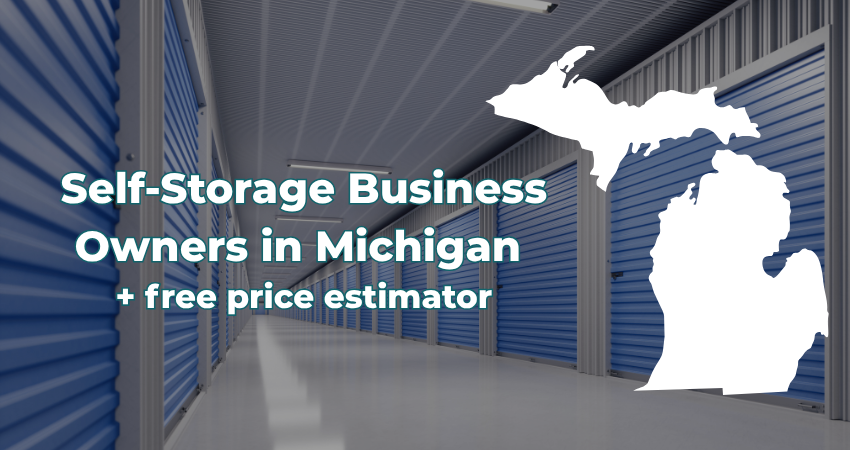
We're a little biased about Michigan self-storage — Spire is headquartered in Traverse City, so we know exactly what a Great Lakes winter does to a metal building, and exactly how busy your boat-and-RV storage gets the week after Labor Day. We also know that a lot of Michigan storage owners are quietly overpaying for coverage they don't need, or missing pieces they really do — and usually don't find out until a roof gives way under heavy snow or a tenant files a claim.
Here's the easiest way to check where you stand: Spire's free Self-Storage Insurance Cost Estimator. Any storage owner can use it, it takes a few minutes, and there's no obligation.
→ Run the free Self-Storage Insurance Cost Estimator
Let's break down what Michigan storage facilities actually need — in plain English.
Why Michigan Self-Storage Has Its Own Risk Profile
Your building faces a very different set of threats than one in Phoenix or Dallas:
- Snow load and roof collapse. Heavy, wet lake-effect snow — especially across West Michigan and the U.P. — puts real weight on flat and low-slope storage roofs. Roof collapse is one of the most expensive claims a Michigan facility can take.
- Freeze/thaw and ice damage. Repeated freezing cracks pavement, foundations, and doors, and ice dams back water into buildings.
- Great Lakes humidity and mold. Climate-controlled buildings are a selling point — but they're also more mechanical systems that can fail. A failed HVAC or dehumidifier can turn into a water-and-mold claim that damages both your building and tenants' goods.
- Spring flooding and lakeshore water. Snowmelt and spring storms flood low-lying facilities. Flood is not part of a standard property policy.
- Seasonal vehicle, boat, and RV storage. Very Michigan — and it changes your risk. Storing a $90,000 boat or a classic car is a different exposure than a 10x10 full of boxes, and your policy needs to reflect it.
What Self-Storage Insurance in Michigan Actually Covers
A solid storage program is a bundle of coverages that work together. Here's the plain-English rundown:
- Commercial Property / Building — your buildings, roll-up doors, fencing, gates, office, signage, and security systems (and the snow-load and water risks that come with a Michigan roof).
- Business Income — replaces lost rental income if a covered event takes units offline while you repair or rebuild.
- General Liability — the slip on an icy lot, the customer hurt loading a trailer, the injury in your hallway.
- Customer Goods / Tenant Legal Liability — narrow protection for tenants' stored property when you're found legally responsible (different from tenants insuring their own goods).
- Sale & Disposal / lien-sale liability — protection tied to auctioning abandoned units, a routine part of the business and a routine source of disputes.
- Crime & Employee Dishonesty — theft and cash-handling exposures.
- Cyber liability — you hold tenant names, addresses, card data, and gate codes; a breach is a genuine risk.
- Garagekeepers / bailee-type coverage — for facilities that store vehicles, boats, and RVs and take on responsibility for them.
- Commercial Umbrella — extra limits stacked over your GL and auto for the big claim.
The right program is the one matched to your buildings, occupancy, and services — not a generic package that charges you for things you'll never use.
Three Places Michigan Storage Owners Lose Money
1. Roof and snow-load surprises. If your building valuation and construction details are out of date, you can be badly under-insured for a snow-load collapse — or overpaying because your policy assumes worse construction than you actually have. Getting the building details right is where accuracy pays off.
2. Tenant coverage gaps. Your facility policy generally does not cover your tenants' belongings. Your lease should clearly require tenants to insure their own goods, and a tenant protection program both closes that gap and adds a small recurring revenue stream per unit. Skip it, and you'll field claims that were never yours to pay.
3. The climate-controlled/mold blind spot. Climate control is great for tenants and great for rates — but only if you insure the mechanical and water risk properly and maintain the systems. A quiet dehumidifier failure over a long weekend is a classic Michigan claim.
How Much Does Self-Storage Insurance Cost in Michigan?
It depends — on your square footage, construction, whether you're climate-controlled, your location and water/snow exposure, the services you offer (boat/RV/vehicle storage, tenant sales), your claims history, and the limits and deductibles you choose.
Instead of guessing, get a tailored starting range built around your actual facility:
→ Get your Michigan self-storage insurance estimate
A couple of minutes, free, no obligation — and the fastest way to tell whether you're currently overpaying at renewal.
Loss-Control Moves That Lower Your Premium in Michigan
Underwriters reward well-run facilities. A few Great Lakes-specific moves that help your rate:
- Have a snow-and-ice plan — roof snow removal on flat/low-slope buildings, plowing, salting, and documented lot maintenance. Slip-and-fall and collapse are your two winter headliners.
- Service your climate-control systems on a schedule and keep the records; document dehumidifier and HVAC maintenance.
- Keep security, lighting, cameras, gates, and fencing in good order and documented — it's a direct underwriting signal.
- Put tenant-insurance language in your lease and enforce proof of coverage where you can.
- Know your flood zone and drainage, and price flood coverage before spring, not after.
- Right-size limits for stored vehicles and boats if you offer that — the values add up fast.
Licensed in Michigan — and 15 More States
Spire is an independent specialty agency built for industries the big generalist carriers underserve, and self-storage is squarely in our wheelhouse. We're currently licensed in 16 states: Michigan, Ohio, Indiana, Illinois, Wisconsin, Minnesota, Nebraska, Oklahoma, Texas, Colorado, Arizona, Nevada, Pennsylvania, North Carolina, Massachusetts, and Maine — and we're adding new states regularly. Don't see yours? Ask anyway; we may have an answer for you.
Frequently Asked Questions
How much does self-storage insurance cost in Michigan?
It depends on facility size, construction, climate control, location, snow/water exposure, services, deductibles, and limits. The quickest realistic number comes from the free Self-Storage Insurance Cost Estimator — a tailored starting range in minutes.
Does my policy cover my tenants' stored items?
Generally no. Tenants are expected to insure their own belongings, and your lease should say so. A tenant protection program can close that gap and add per-unit revenue. Your own coverage responds to your buildings, liability, and — in specific cases — your legal responsibility for stored goods.
Am I covered if my roof collapses under snow?
Snow-load collapse is typically a covered property peril — but only up to your insured building value with the right construction details on file. Under-valued or outdated building information is where owners get caught short. Confirm your replacement values before winter.
Is mold from a climate-control failure covered?
It depends on the cause and your policy's mold terms. Sudden water damage from a failed system may respond; long-term humidity neglect often won't. Maintenance records matter, both for claims and for pricing.
How do I know if I'm overpaying?
Run the estimator to see where your premium should land, then have a specialty broker compare it to your current policy, occupancy, and values. Coverage that hasn't been reviewed in a few years is the most common source of overpayment.
See Your Number Before You Renew
Whether you run a single facility up north or several across the state, the smartest first move is knowing what your coverage should cost.
→ Run the free Self-Storage Insurance Cost Estimator — a couple of minutes, no obligation. Or learn more about our self-storage insurance program.
This article is for general educational purposes and is not insurance, legal, or tax advice. Coverage terms, availability, deductibles, and pricing vary by carrier, policy, and individual underwriting. Estimator results are starting ranges, not quotes. Please talk to a licensed Spire specialist about your specific facility.
Sources & further reading:
- Insurance Information Institute — https://www.iii.org
- Self Storage Association — https://www.selfstorage.org
- Michigan Department of Insurance and Financial Services (DIFS) — https://www.michigan.gov/difs
- National Flood Insurance Program (FloodSmart) — https://www.floodsmart.gov
- National Fire Protection Association — https://www.nfpa.org



.png)