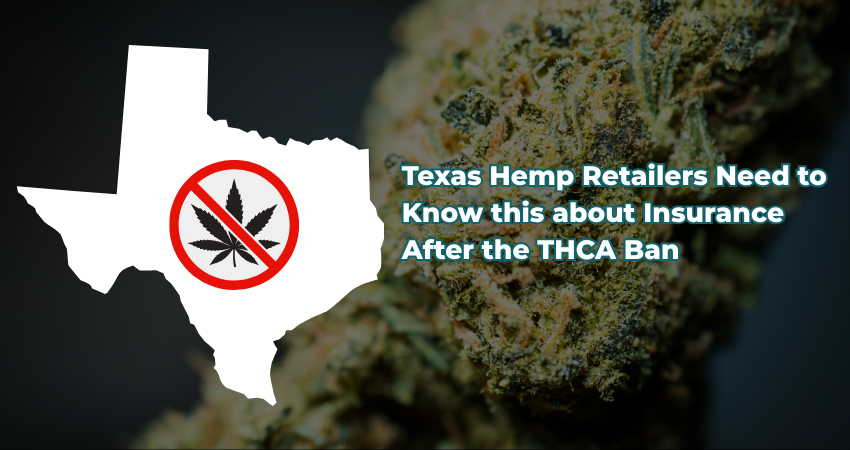
If you run a hemp shop, a CBD store, or a smoke shop anywhere in Texas right now, you've spent the last year and a half living with a moving target. SB 3. The Governor's veto. Executive Order GA-56. New DSHS rules. A ban that took effect, then got blocked, then got reinstated. It's exhausting — and the hardest part is that you're expected to keep the lights on, keep your staff paid, and keep customers happy while the ground keeps shifting under you.
We won't pretend to have a crystal ball on where Texas law finally lands. But there's one part of this you can get ahead of today, and it's the part most operators forget about until it's too late: your insurance. When the legal status of a product changes, so does whether your policy will actually pay a claim on it. Here's a plain-English look at the three deadlines Texas hemp retailers are searching for right now — and exactly what each one means for your coverage.
Short answer: The biggest insurance risk after the THCA crackdown isn't a fire or a slip-and-fall — it's a controlled-substance exclusion quietly voiding coverage on products that have been reclassified, plus carriers non-renewing hemp accounts as the rules tighten. Three dates are driving the urgency: the federal hemp redefinition on November 12, 2026, the ongoing fight over Texas's "total THC" smokable rule, and your annual DSHS registration renewal at the new, much higher fees. Getting your coverage reviewed before those dates is the single most protective move you can make.
Deadline 1: What happens to hemp products on November 12, 2026?
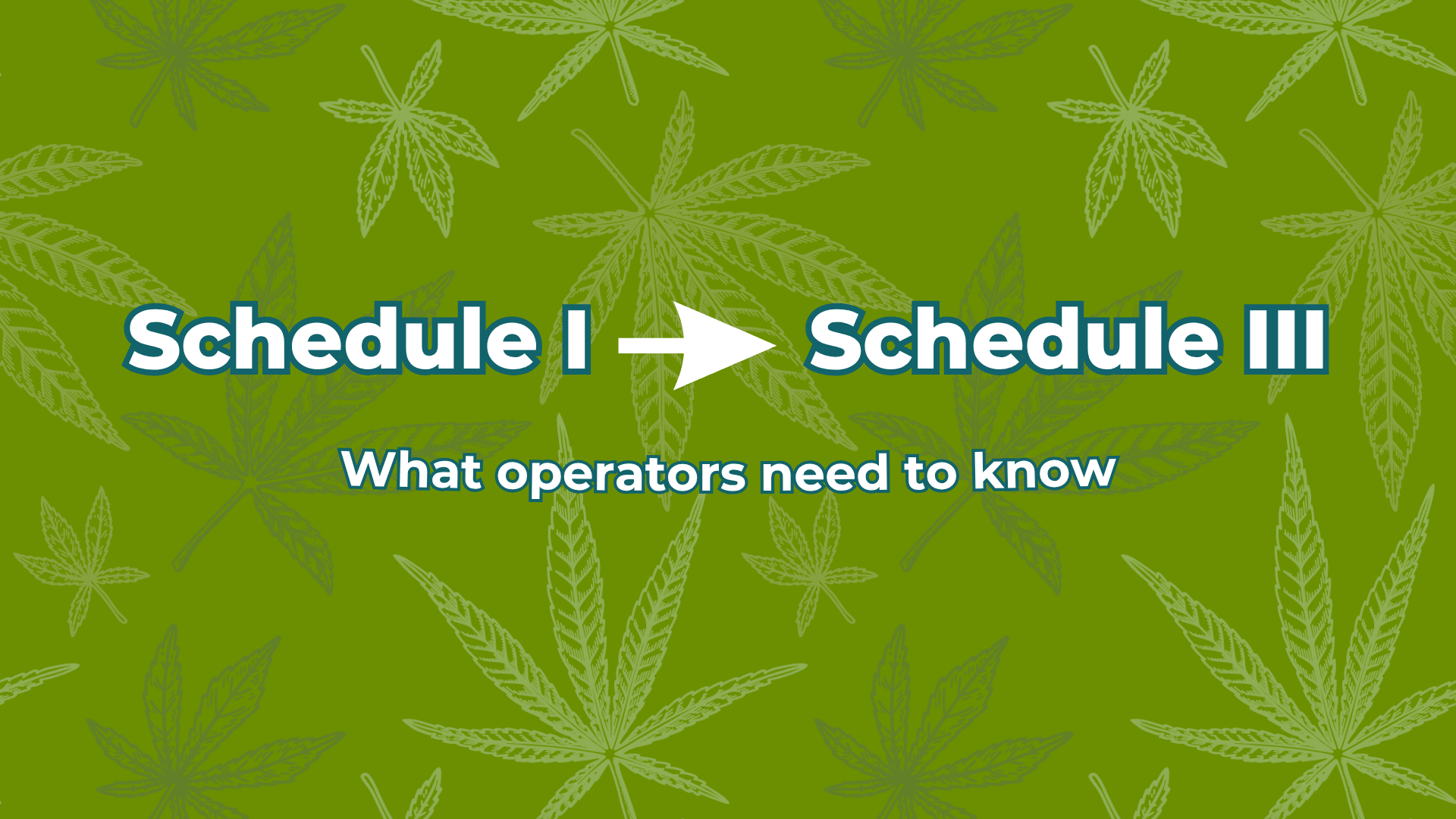
On November 12, 2026, the federal definition of "hemp" changes — and most intoxicating hemp products lose their federal legal footing. The 2025 federal appropriations law (P.L. 119-37) rewrote the 2018 Farm Bill's definition of hemp. Instead of measuring only delta-9 THC, compliance now turns on total THC, including THCA, and any finished hemp-derived cannabinoid product with more than 0.4 milligrams of total THC per container falls outside the definition. Congress built in a one-year runway, so the new standard takes effect November 12, 2026.
In practical terms, that captures the products a lot of Texas shops depend on — THCA flower, delta-8, delta-10, HHC, and most gummies and beverages formulated above that tiny per-container cap. Industry groups estimate the change could sweep in the large majority of today's consumable hemp products.
Why it matters for insurance: a standard commercial policy will not pay a claim tied to a federally controlled substance. The day a product loses its "hemp" status is the day your general liability, product liability, and property coverage on that inventory can evaporate — even if the policy is paid in full.
Deadline 2: Is THCA flower still legal to sell in Texas right now?
As of publication, THCA flower's status in Texas is genuinely unsettled and being fought over in court — which is exactly why so many operators are refreshing the news every morning. Here's the short version of how we got here: Texas DSHS adopted rules effective March 31, 2026 that count THCA toward "total THC" and effectively push most smokable hemp flower off the shelf. A Travis County court blocked those rules in April 2026, and then the Fifteenth Court of Appeals reinstated them weeks later, with the underlying case still ongoing.
Translation for a shop owner: the "total THC" testing standard has been on, off, and on again, and it may move again before it's finally resolved. That whiplash is stressful, and it's not your fault.
Why it matters for insurance: when the compliant/non-compliant line for your core product keeps moving, your exposure moves with it. A product that's legal the week you stock it can become a controlled substance the week a court rules — and your coverage follows the legal status, not your good-faith intentions. This is the same "Schedule I exclusion" gap that quietly breaks standard cargo and property policies across the cannabis and hemp space.
Deadline 3: When do I renew my DSHS hemp registration — and what does it cost now?
Every consumable hemp retail registration in Texas must be renewed annually, and the fees jumped dramatically under the 2026 rules. Following Governor Abbott's Executive Order GA-56, DSHS raised the retail hemp registration to $5,000 per location, per year, and the manufacturer/processor license to $10,000 per location, per year (plus the state's online processing fee) — up from a small fraction of that under the old schedule. Your specific renewal date runs from when your registration was issued, so it's worth pulling your paperwork now rather than being surprised.
Why it matters for insurance: your registration status is your insurability. Most hemp programs require you to be properly licensed and in good standing; if your registration lapses, a carrier can deny a claim or decline to renew. And many commercial leases require you to carry specific coverage as a condition of occupancy — so a coverage gap can put your lease at risk too. When you're budgeting for those steep renewal fees, build the insurance review into the same conversation.
Why does the THCA ban put my insurance at risk?
Because insurance for federally illegal products lives or dies on one clause: the controlled-substance exclusion. Standard commercial policies exclude losses connected to substances that are illegal under federal law. As long as a product met the federal "hemp" definition, it sat on the legal side of that line. Once a product is reclassified — by the federal redefinition, by a Texas rule, or by a court ruling — it can cross to the illegal side, and the exclusion can wipe out coverage for that product back to the date of loss.
This is the trap: your policy can look completely healthy — premiums paid, limits intact — while the coverage you actually need on your best-selling products has quietly gone hollow. The fix isn't a generic small-business policy. It's a program built for hemp and cannabis risk by people who read these clauses for a living.
Will my current policy cover inventory I can no longer sell?
Usually not, and this is where owners get hurt. If a rule change forces you to pull product, a standard property policy generally won't reimburse you for merchandise that simply became illegal to sell — that's a regulatory or legislative loss, not a covered peril like fire or theft. Similarly, if a customer files a claim over a product that's since been reclassified, your product-liability coverage may be excluded from responding.
There are real tools that help — careful product-liability structuring, recall-related coverages, and business-income protection — but they have to be put in place before the loss, and they have to be written with these exclusions in mind. A broker who understands the hemp market can tell you which of your products are exposed and what can realistically be covered.
Can my insurer drop me because of the new hemp rules?
Yes — and non-renewal is one of the most common ways operators get blindsided in a tightening market. As regulations tighten and headlines pile up, some carriers exit the hemp class entirely or decline to renew accounts at their next term. If that happens, you can be left scrambling for replacement coverage right when the market has the fewest options and the highest prices.
The protective move is to work with an independent specialty agency that carries more than one hemp and cannabis market. If one carrier pulls back, an independent broker can move you to another — instead of leaving you uninsured while you're also trying to comply with a brand-new rulebook.
What should Texas hemp retailers do about insurance right now?
You can't control the Legislature or the courts, but you can control your coverage. A few concrete steps:
- Do a product-by-product exposure check. Sort your inventory into what's clearly compliant, what's in legal limbo (THCA flower, delta-8, and similar), and what the November 2026 federal cap will likely capture. This is the foundation for every insurance decision.
- Read your controlled-substance exclusion — with help. Ask your broker to walk you through exactly which products your policy will and won't defend today.
- Confirm you're insured through a true hemp/cannabis market, not a generic business-owner policy that will deny the claim that matters most.
- Line up your DSHS renewal and your insurance review together, so your good-standing status and your coverage never fall out of sync.
- Make sure your agency has multiple markets, so a single carrier's exit doesn't leave you bare.
- Keep clean compliance records — testing, labeling, age-verification, and lab COAs. Good documentation is both a legal defense and an underwriting asset that helps your pricing.
Frequently asked questions
Does my business insurance cover THCA or delta-8 products?
It depends entirely on the product's legal status and your policy's exclusions. While a product meets the federal "hemp" definition it can be covered, but once it's reclassified as a controlled substance, the controlled-substance exclusion can void coverage on it. Have a specialty broker review your exact policy language and product mix.
Will insurance reimburse me for inventory I have to pull off the shelf?
Generally no. A standard property policy covers perils like fire and theft, not merchandise that becomes illegal to sell because of a rule or court decision. Business-income and recall-related coverages can help in specific situations, but they must be in place before the loss.
Can I lose coverage even if my premium is paid?
Yes. Coverage follows the legal status of the product, not your payment history. A paid-up policy can still decline a claim tied to a substance that's been reclassified as federally controlled.
Is CBD still insurable in Texas?
Compliant, non-intoxicating CBD generally remains the easiest hemp product to insure, but the November 2026 federal per-container cap and Texas's evolving rules can still affect specific formulations. A review of your actual product line is the only way to know where you stand.
What's the single most important step before the November 2026 deadline?
Get an independent specialty broker to review your controlled-substance exclusion and your product exposure now, while you still have time to restructure coverage or change markets — not after a loss or a non-renewal notice.
Talk to a broker who actually understands hemp
You've had to become an amateur lawyer, lobbyist, and lab tech over the last 18 months. You shouldn't have to become an insurance expert too. Spire is an independent specialty agency built for exactly the industries that generalist carriers underserve — and cannabis and hemp is where we started. We know the controlled-substance exclusion cold, we carry multiple hemp and cannabis markets, and we can tell you in plain English which of your products are actually protected.
→ Learn about our cannabis & hemp insurance program or get a fast starting estimate with our free cost estimator — no obligation, no pressure. Prefer to talk it through? Request a commercial quote and a specialist will walk you through it.
Whatever Texas decides next, the shops that come through this in one piece will be the ones who got their coverage right before the deadline — not after.
This article is for general educational purposes and is not legal, tax, or insurance advice. Hemp and cannabis laws are changing rapidly and vary by state and over time; coverage always depends on the specific terms, conditions, and exclusions of your policy and on individual underwriting. Please confirm current requirements with the relevant agencies and consult a licensed Spire specialist about your specific business.
Sources & further reading:
- Texas State Law Library — Consumable Hemp Products guide — https://guides.sll.texas.gov/cannabis/hemp-products
- Texas DSHS — Consumable Hemp Program (rules, fees, registration) — https://www.dshs.texas.gov/consumable-hemp-program
- Office of the Texas Governor — Executive Order GA-56 — https://gov.texas.gov/news/post/governor-abbott-issues-executive-order-to-protect-children-from-hemp-products
- Clark Hill PLC — "Texas Hemp THC Crackdown Is Now in Effect" — https://www.clarkhill.com/news-events/news/texas-hemp-thc-crackdown-is-now-in-effect-what-businesses-need-to-know/
- Womble Bond Dickinson — "Navigating New Hemp Laws: A Major Shift for the Cannabis Industry" — https://www.womblebonddickinson.com/us/insights/blogs/navigating-new-hemp-laws-major-shift-cannabis-industry
- Troutman Pepper Locke (Regulatory Oversight) — "Congress Narrows Federal Definition of 'Hemp'" — https://www.regulatoryoversight.com/2025/12/congress-narrows-federal-definition-of-hemp-effectively-banning-most-intoxicating-hemp-products/
.png)

.png)